HOMEOSTASIS AND OSMOREGULATION
SUBTOPIC: Homeostasis
SPECIFIC OUTCOMES:
1. Describe the mechanism of thermoregulation by the skin.
2. Describe the role of the liver in the regulation of blood sugar and body temperature.
INTRODUCTION
Our bodies are amazing at keeping everything just right, even when the world around us changes. This special ability to maintain a stable internal environment is called homeostasis. It's like having an internal thermostat and control system that makes sure our body temperature, blood sugar, and water levels stay balanced for our cells to work properly. In this topic, we will explore how our skin helps control our body temperature and how our liver plays a crucial role in managing blood sugar and producing heat.
CORE CONCEPTS
1. UNDERSTANDING HOMEOSTASIS
Homeostasis is the process by which the body maintains a stable internal environment despite changes in external conditions. Think of it as keeping things balanced inside, like the right temperature or the right amount of sugar in the blood. If these conditions go too far out of balance, our body's cells cannot function correctly, and we can become sick.
Thermoregulation is a key part of homeostasis, specifically referring to the regulation of body temperature. Our bodies need to stay at a temperature of about 37°C for enzymes to work best.
Osmoregulation is another part of homeostasis, which is the process of maintaining the proper balance of water and salts (solutes) in the body.
2. MECHANISM OF THERMOREGULATION BY THE SKIN
The skin is our body's largest organ, and it plays a very important role in helping us keep our body temperature stable. It acts like a cooling and heating system.
2.1. OVERHEATING: HOW THE SKIN COOLS THE BODY
When our body temperature starts to rise above 37°C (for example, when we exercise or it's a hot day), the skin uses two main mechanisms to cool us down:
• Vasodilation: The tiny blood vessels (capillaries) just under the surface of the skin widen. This is called vasodilation. When these vessels widen, more warm blood flows closer to the surface of the skin. This allows heat to escape from the blood into the cooler surroundings, making the skin feel warm.
• Sweating: Small glands in the skin called sweat glands produce a watery liquid called sweat. This sweat is released onto the surface of the skin. As the sweat evaporates, it takes heat energy from the skin, cooling the body down. This is why you feel cooler when sweat dries on your skin.
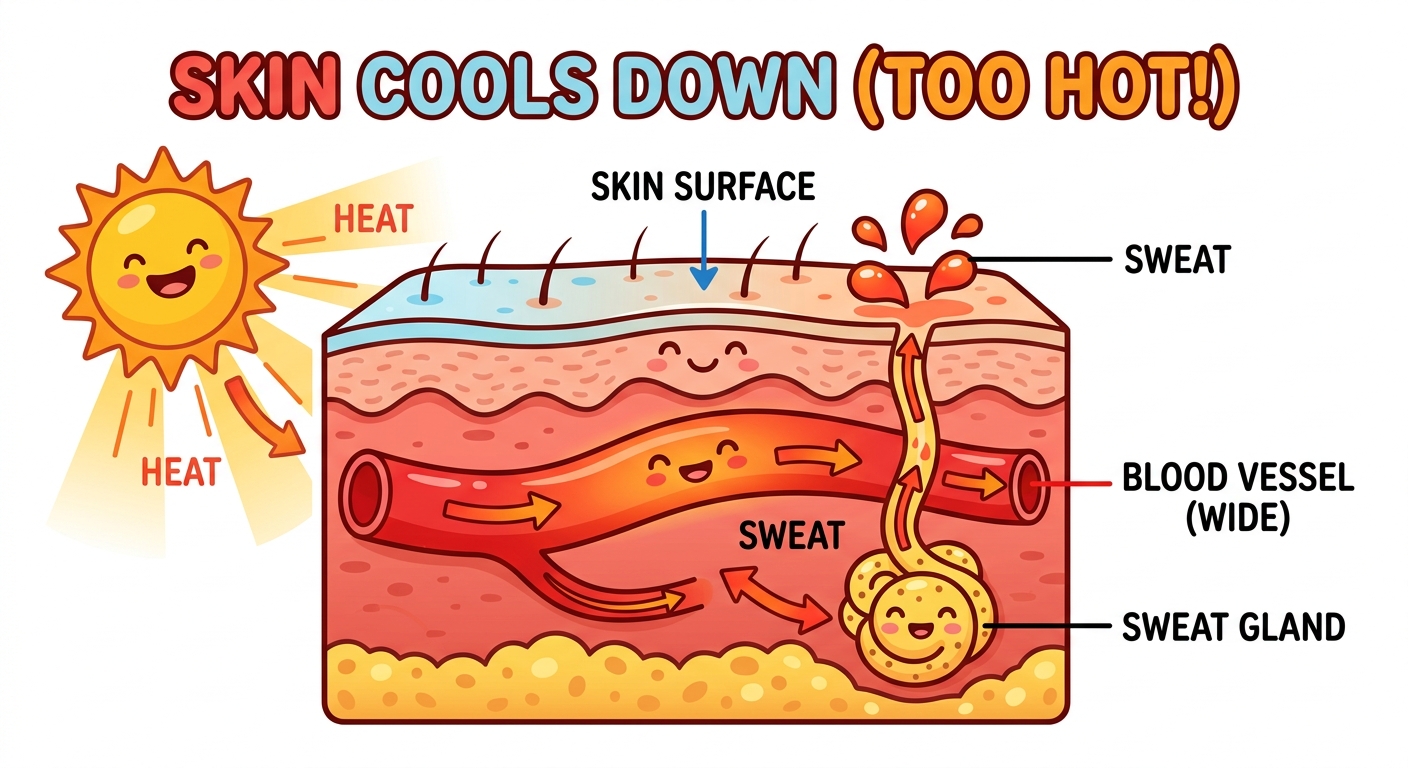 |
SKIN COOLS DOWN (TOO HOT!) |
2.2. OVERCOOLING: HOW THE SKIN WARMS THE BODY
When our body temperature drops below 37°C (for example, when it's cold outside), the skin uses mechanisms to keep us warm:
• Vasoconstriction: The tiny blood vessels under the skin narrow. This is called vasoconstriction. When these vessels narrow, less blood flows close to the skin surface. This reduces heat loss from the blood to the surroundings, helping to keep the core body warm. This is why your skin might look paler when you are cold.
• Shivering: If vasoconstriction isn't enough, our muscles start to contract and relax very quickly. This rapid contraction is called shivering. Muscle contractions produce heat as a byproduct, which helps to warm up the body.
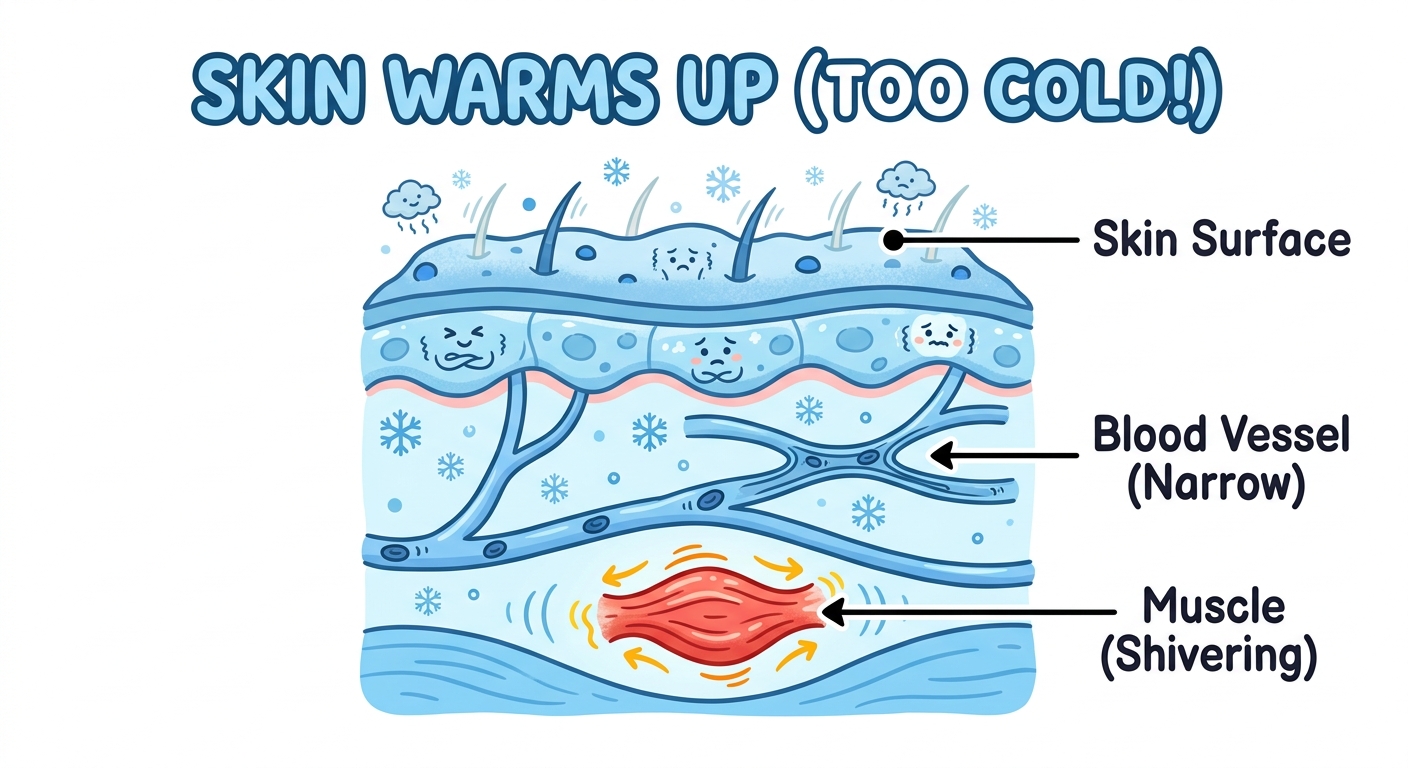 |
SKIN WARMS UP (TOO COLD!) |
✅ Check Your Understanding
Pause here. Let learners attempt these before moving on.
| 1. Quick Recall [1 mark] |
Name one way the skin helps to cool the body when it is too hot. |
| 2. Apply the Concept [2 marks] |
Explain why shivering helps to warm up the body. |
| 3. Misconception Check |
True or False: When you are cold, your blood vessels near the skin get wider to let more warm blood flow out and warm up your skin. Justify your answer. |
Answers
1. Sweating or Vasodilation.
2. Shivering involves rapid contraction and relaxation of muscles. These muscle contractions generate heat as a byproduct, which helps to raise the body's temperature.
3. False. When you are cold, your blood vessels near the skin get narrower (vasoconstriction) to reduce blood flow to the surface and conserve heat in the core of the body. (Common error: Confusing vasodilation with vasoconstriction and their effects on heat loss/conservation).
3. ROLE OF THE LIVER IN HOMEOSTASIS
The liver is a very large and important organ that has many jobs in maintaining homeostasis, including regulating blood sugar and helping to keep our body warm.
3.1. REGULATION OF BLOOD SUGAR
After we eat, especially foods rich in carbohydrates, the sugar (glucose) in our blood increases. The liver works like a sugar manager to keep the blood glucose levels just right.
• Conversion of Glucose to Glycogen: When there is too much glucose in the blood (e.g., after a meal), a hormone called insulin tells the liver to take up this extra glucose. The liver then converts the glucose into a stored form called glycogen. Glycogen is like a stored energy reserve.
• Conversion of Glycogen to Glucose: When blood sugar levels drop too low (e.g., when you haven't eaten for a while or during exercise), another hormone called glucagon tells the liver to break down the stored glycogen back into glucose. This glucose is then released into the blood to raise blood sugar levels to normal.
• Amino Acids and Glycerol to Glucose (Gluconeogenesis): If the body needs glucose and there isn't enough glycogen stored, the liver can also make new glucose from non-carbohydrate sources, such as amino acids (from proteins) and glycerol (from fats). This process is called gluconeogenesis. This is very important during long periods without food or intense exercise to ensure the brain and other organs have enough energy.
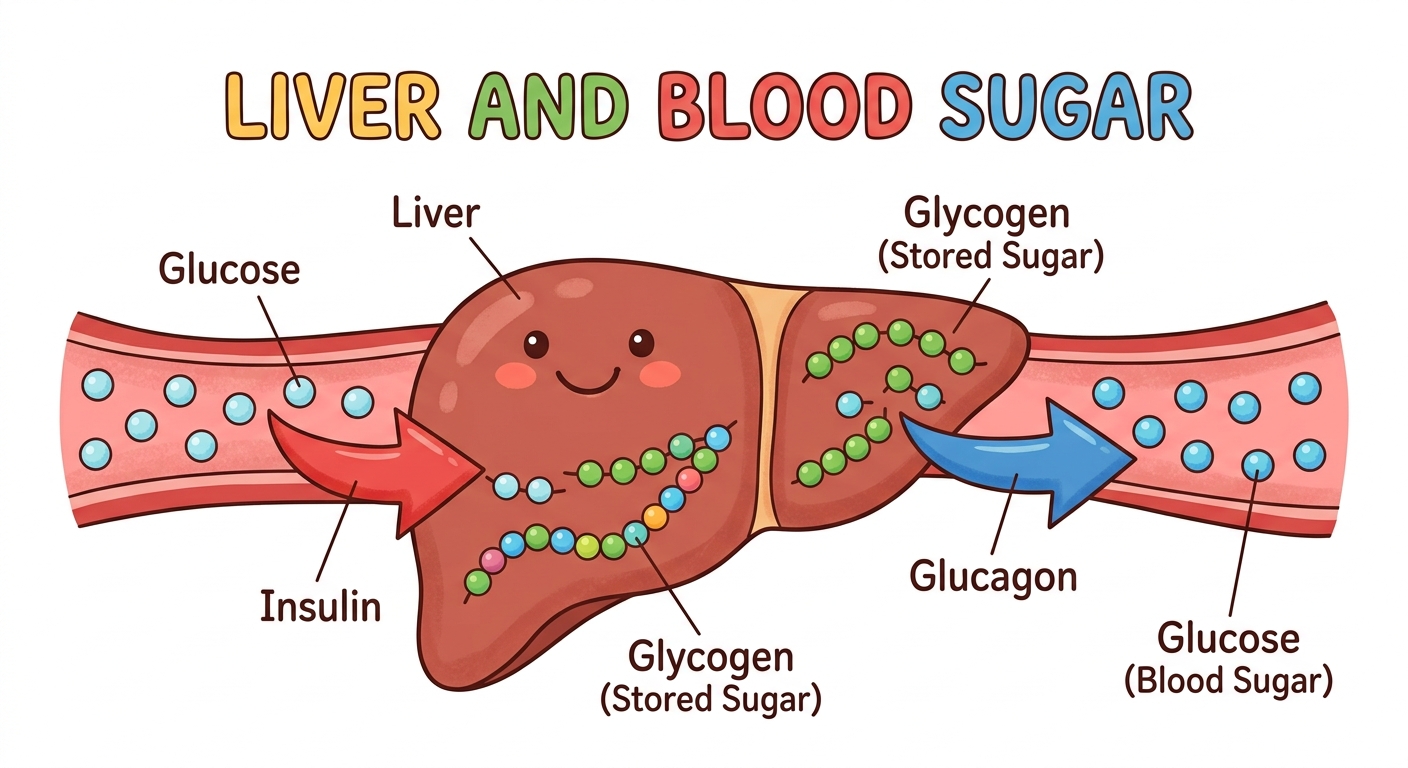 |
LIVER AND BLOOD SUGAR |
3.2. REGULATION OF BODY TEMPERATURE BY THE LIVER
The liver is one of the most metabolically active organs in the body. This means it carries out many chemical reactions to process nutrients, detoxify substances, and produce important molecules. All these metabolic activities generate a significant amount of heat as a byproduct. This heat is released into the blood flowing through the liver, helping to maintain the core body temperature. So, the liver is constantly working and, in doing so, acts as a heat source for the body.
✅ Check Your Understanding
Pause here. Let learners attempt these before moving on.
| 1. Quick Recall [1 mark] |
What is the stored form of glucose in the liver called? |
| 2. Apply the Concept [2 marks] |
Imagine you skip breakfast and your blood sugar starts to drop. Which hormone will tell your liver to release more glucose into your blood, and how will it do this? |
| 3. Misconception Check |
True or False: The liver cools the body down by converting excess heat into glucose. Justify your answer. |
Answers
1. Glycogen.
2. The hormone glucagon will tell the liver to break down the stored glycogen back into glucose. This glucose will then be released into the blood to raise blood sugar levels to normal.
3. False. The liver actually generates heat as a byproduct of its many metabolic processes, helping to warm the body, not cool it down by converting heat. (Common error: Assuming all liver functions are about cooling or sugar conversion, missing its role in heat production).
SUMMARY
Homeostasis is essential for our bodies to function correctly by maintaining a stable internal environment. The skin plays a crucial role in thermoregulation: it cools the body through vasodilation (widening blood vessels) and sweating, and warms the body through vasoconstriction (narrowing blood vessels) and shivering. The liver is vital for regulating blood sugar by converting glucose to glycogen for storage (with insulin) and glycogen back to glucose when needed (with glucagon). It can also make glucose from other sources like amino acids and glycerol. Additionally, the liver contributes to body temperature by generating heat through its active metabolic processes.
ASSESSMENT QUESTIONS
1. Describe two ways the skin helps to reduce body temperature when a person is too hot. [2 marks]
2. Explain how the liver helps to lower blood sugar levels after a meal. [2 marks]
3. State the term for the process where blood vessels near the skin surface become wider to increase heat loss. [1 mark]
4. A student is walking in a very cold environment and starts to shiver.
(a) What is the purpose of shivering in this situation? [1 mark]
(b) Name another mechanism the skin uses to keep the body warm in cold conditions. [1 mark]
5. Explain how the liver helps to maintain body temperature. [2 marks]
6. When blood sugar levels are low, the liver can produce new glucose from substances like amino acids and glycerol. What is the name of this process? [1 mark]
COMMON DIFFICULTIES & MISCONCEPTIONS
• Confusing Vasodilation and Vasoconstriction: Learners often mix up which process causes widening and which causes narrowing of blood vessels, and whether this leads to heat loss or heat conservation.
Correction:* Emphasize 'dilation' means to expand/widen (like dilating pupils), leading to more blood flow and heat loss. 'Constriction' means to narrow/tighten, leading to less blood flow and heat conservation.
• Role of Sweat: Some learners think sweat itself cools the body directly, rather than the evaporation of sweat.
Correction: Explain that it's the change of state* from liquid sweat to water vapour that absorbs heat from the skin, causing cooling.
• Liver's only role in blood sugar: Learners might only remember glucose storage, forgetting about glucose production from glycogen or non-carbohydrate sources.
Correction: Highlight the liver's dynamic role: it stores and releases glucose, and can create* glucose from other molecules.
• Liver and heat production: Some learners may not realise that the liver, due to its high metabolic activity, is a significant source of heat for the body.
Correction:* Explain that all the chemical reactions happening in the liver produce heat as a byproduct, just like a busy factory generates heat.
QUICK REFERENCE SUMMARY
Homeostasis Key Mechanisms
| Mechanism |
When Body is Too HOT |
When Body is Too COLD |
| Blood Vessels (Skin) |
Vasodilation (widen) → More heat loss |
Vasoconstriction (narrow) → Less heat loss |
| Sweat Glands |
Produce sweat → Evaporation cools skin |
Less/No sweat production |
| Muscles |
Relaxed |
Shivering (contract rapidly) → Generates heat |
| Liver Function |
Effect / Role |
| Blood Sugar (High) |
Converts glucose to glycogen (storage) with insulin |
| Blood Sugar (Low) |
Converts glycogen to glucose (release) with glucagon
Converts amino acids/glycerol to glucose (gluconeogenesis) |
| Body Temperature |
Generates heat through metabolic activities |
Figure: Summary of thermoregulation by skin and liver's homeostatic roles